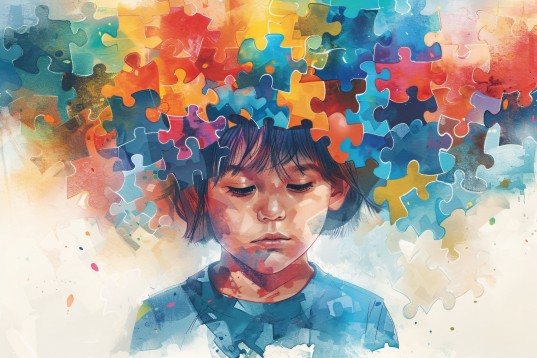
Myths on autism debunked with gene theory and resolved
In gene theory its now widely accepted it is the father who is mostly responsible for it. Research from Cold Spring Harbor Laboratory indicates that children with autism may inherit more risk-related genetic material from their father. Furthermore, higher paternal age is linked to an increased risk of spontaneous mutations.
Core Behavioral Criteria (DSM-5 & ICD-11):
Modern autism assessments are based on the criteria outlined in the Diagnostic and Statistical Manual of Mental Disorders, Fifth Edition (DSM-5) or the International Classification of Diseases 11th Revision (ICD-11). These criteria focus on two main domains:
Persistent deficits in social communication and interaction: Assessing for challenges in reciprocal social interaction, verbal/nonverbal communication, and developing relationships.
Restricted, repetitive patterns of behavior: Evaluating for rigid routines, stereotypical motor movements, fixated interests, and hyper- or hypo-reactivity to sensory input.
And its problematic. While evaluation is on social parameters the treatment is handed over to people who are basically taught of body as collection of organs ,whose foundation of knowledge depended on dead bodies (be it grave diggers bounty or dead men in mortuary ----who have lost the unifying power that divides between dead and live ).And human behavior certainly cant be medical domain because if one reads these manuals they focus on rehabilitative therapy , counselling –domains our doctors are not taught, nor trained .
And they even in its latest manuals take no note of neuro plasticity of brain principals ---which is now well accepted medically and which was recognized 3000 years back in school of meditation ---that mind (manas) is modulate able under learning and discipline.
Types of Treatments
There are many types of treatments available. These treatments generally can be broken down into the following categories, although some treatments involve more than one approach:
-
Behavioral
-
Developmental
-
Educational
-
Social-relational
-
Pharmacological
-
Psychological
-
Complementary and alternative
Behavioral approaches
Behavioral approaches focus on changing behaviors by understanding what happens before and after the behavior. Behavioral approaches have the most evidence for treating symptoms of ASD. They have become widely accepted among educators and healthcare professionals and are used in many schools and treatment clinics. A notable behavioral treatment for people with ASD is called applied behavior analysis (ABA). ABA encourages desired behaviors and discourages undesired behaviors to improve a variety of skills. Progress is tracked and measured.
Two ABA teaching styles are discrete trial training (DTT) and pivotal response training (PRT).
-
DTT uses step-by-step instructions to teach a desired behavior or response. Lessons are broken down into their simplest parts, and desired answers and behaviors are rewarded. Undesired answers and behaviors are ignored.
-
PRT takes place in a natural setting rather than clinic setting. The goal of PRT is to improve a few "pivotal skills" that will help the person learn many other skills. One example of a pivotal skill is being able to initiate communication with others.
Developmental approaches
Developmental approaches focus on improving specific developmental skills, such as language skills or physical skills, or a broader range of interconnected developmental abilities. Developmental approaches are often combined with behavioral approaches.
The most common developmental therapy for people with ASD is speech and language therapy. Speech and language therapy helps to improve the person's understanding and use of speech and language. Some people with ASD communicate verbally. Others may communicate through the use of signs, gestures, pictures, or an electronic communication device.
Occupational therapy teaches skills that help the person live as independently as possible. Skills may include dressing, eating, bathing, and relating to people. Occupational therapy can also include
-
Sensory integration therapy to help improve responses to sensory input that may be restrictive or overwhelming.
-
Physical therapy can help improve physical skills, such as fine movements of the fingers or larger movements of the trunk and body.
The Early Start Denver Model (ESDM) is a broad developmental approach based on the principles of ABA. It is used with children 12–48 months of age. Parents and therapists use play, social exchanges, and shared attention in natural settings to improve language, social, and learning skills.
Educational approaches
Educational treatments are given in a classroom setting. One type of educational approach is the Treatment and Education of Autistic and Related Communication-Handicapped Children (TEACCH) approach. TEACCH is based on the idea that people with autism thrive on consistency and visual learning. It provides teachers with ways to adjust the classroom structure and improve academic and other outcomes. For example, daily routines can be written or drawn and placed in clear sight. Boundaries can be set around learning stations. Verbal instructions can be complemented with visual instructions or physical demonstrations.
Social-relational approaches
Social-relational treatments focus on improving social skills and building emotional bonds. Some socialrelational approaches involve parents or peer mentors.
-
The Developmental, Individual Differences, Relationship-Based model (also called DIR or "Floor Time") encourages parents and therapists to follow the interests of the individual to expand opportunities for communication.
-
The Relationship Development Intervention (RDI) model involves activities that increase motivation, interest, and abilities to participate in shared social interactions.
-
Social Stories provide simple descriptions of what to expect in a social situation.
-
Social skills groups provide opportunities for people with ASD to practice social skills in a structured environment.
• Pharmacological approaches
Important to know
There are no medications that treat the core symptoms of ASD.
Some medications treat co-occurring symptoms (those that happen along with ASD) and can help people with ASD function better. For example, medication might help manage high energy levels, inability to focus, or self-harming behavior, such as head banging or hand biting. Medication can also help manage co-occurring psychological conditions, such as anxiety or depression, in addition to medical conditions such as seizures, sleep problems, or stomach or other gastrointestinal problems.
It is important to work with a doctor who has experience in treating people with ASD when considering the use of medication. This applies to both prescription medication and over-the-counter medication. Individuals, families, and doctors must work together to monitor progress and reactions to be sure any negative side effects of the medication do not outweigh the benefits.
Psychological approaches
Psychological approaches can help people with ASD cope with anxiety, depression, and other mental health issues. Cognitive-behavior therapy (CBT) is one psychological approach that focuses on learning the connections between thoughts, feelings, and behaviors. During CBT, a therapist, and the individual work together to identify goals and then change how the person thinks about a situation to change how they react to the situation.
Complementary and alternative treatments
Some people with ASD and their families use treatments that do not fit into any of the other categories. These treatments are known as complementary and alternative treatments. Complementary and alternative treatments are often used to supplement more traditional approaches. They might include special diets, herbal supplements, chiropractic care, animal therapy, arts therapy, mindfulness, or relaxation therapies.
By Satish Dhar

.jpg)

Discussion (0)
No comments yet. Be the first to comment!
Leave a Comment
You need to login to post a comment.